Australia
Australia Australia Australia Joe Journeys Hotels
Australia
The Commonwealth of Australia, is a country in the southern hemisphere comprising the mainland of the world's smallest continent. Australia is far from being the smallest country to explore.

For some 40,000 years before European settlement commenced in the late 18th century, the Australian mainland and Tasmania were inhabited by around 250 individual nations of indigenous Australians. After sporadic visits by fishermen from the immediate north, and European discovery by Dutch explorers in 1606, the eastern half of Australia was claimed by the British in 1770 and initially settled through penal transportation to the colony of New South Wales, founded on 26 January 1788. The population grew steadily, the continent was explored, and during the 19th century another five largely self-governing Crown Colonies were established. On 1 January 1901 the six colonies became a federation and the Commonwealth of Australia was formed. The name Australia comes from the Latin australis, meaning "southern". Legends of an "unknown land of the south" date back to Roman times and were commonplace in medieval geography but were not based on any documented knowledge of the continent. Since early in the 20th century, the country has been sometimes referred to locally and internationally as Oz. Aussie is common as an adjective and also as a noun referring to an Australian.

Human habitation of Australia is estimated to have begun between 42,000 and 48,000 years ago possibly with the migration of people by land bridges and short sea-crossings from what is now Southeast Asia. At the time of European settlement in the 18th century, most Indigenous Australians were hunter-gatherers, with a complex oral culture and spiritual values based on reverence for the land and a belief in the Dreamtime.

The first recorded European sighting of the Australian mainland and the first recorded European landfall on the Australian continent both belong to the Dutch navigator Willem Janszoon in early 1606. During the 17th century the Dutch charted the whole of the western and northern coastlines of what they called New Holland but made no attempt at settlement. In 1770 James Cook sailed along and mapped the east coast which he named New South Wales and claimed it for Great Britain, which prepared the way for establishment of a new penal colony, a transportation of convicts. The British Crown Colony of New South Wales began a settlement at Port Jackson on 26 January 1788, later to become Australia's national day, Australia Day. The United Kingdom formally claimed the western part of Australia in 1829.

The Indigenous Australian population, estimated at 350,000 at the time of European settlement, declined for 150 years following settlement, mainly because of infectious disease. The "Stolen Generations", removal of Aboriginal children from their families, which historians have argued could be considered genocide, may have contributed to the decline in the indigenous population.

Between 1855 and 1890, the six colonies individually gained responsible government, managing most of their own affairs while remaining part of the British Empire. The Colonial Office in London retained control of some matters, notably foreign affairs, defence, and international shipping. On 1 January 1901, federation of the colonies was achieved after a decade of planning, consultation, and voting. The Commonwealth of Australia was born. In 1914 Australia joined Britain in fighting World War I. Many Australians regard the defeat of the Australian and New Zealand Army Corps (ANZACs) at Gallipoli as the birth of the nation, its first major military action. The shock of the UK's defeat in Asia in 1942 and the threat of Japanese invasion caused Australia to turn to the United States as a new ally and protector. Since 1951, Australia has been a formal military ally of the US. After World War II, Australia encouraged immigration from Europe, since the 1970s and the abolition of the White Australia policy, immigration from Asia and elsewhere was also encouraged. As a result, Australia's demography, culture, and self-image have been transformed. The final constitutional ties between Australia and the UK were severed with the passing of the Australia Act 1986, ending any British role in the government of the Australian States.

Surrounded by the Indian and Pacific oceans, separated from Asia by the Arafura and Timor seas, the world's smallest continent and sixth largest country by total area, Australia is often dubbed the 'island continent' and variably considered the world's largest island. The Great Barrier Reef, the world's largest coral reef, lies a short distance off the north-east coast and extends for over 2,000 kilometres. The largest part is desert or semi-arid land commonly known as the outback. Australia is the flattest continent, with the oldest and least fertile soils, and is the driest inhabited continent. The south-east and south-west corners of the continent have a temperate climate, landscapes of the northern part of the country, with a tropical climate, consist of rainforest, woodland, grassland, mangrove swamps, and desert. Forests often contain a wide variety of eucalyptus trees and are mostly located in higher rainfall regions. Well-known Australian fauna are the the platypus, kangaroo, koala, and the wombat; the saltwater and freshwater crocodiles; and birds such as the emu and the kookaburra. It has the greatest number of reptiles of any country, with 755 species. Home to many dangerous animals including some of the most venomous snakes, six of the top ten deadliest snakes in the world. The Sydney Funnel Web spider, the world's deadliest spider, is found in and around Sydney and eastern New South Wales. The Red Back spider, identified by a red mark on its abdomen, is common and typically hide in dark places and corners. Travelers in northern Queensland, Northern Territory, or northern Western Australia should be aware of the risk of fatal stings from the Box Jellyfish if swimming in the ocean between October and May. They are very hard to detect and can be found in very shallow water. Stings from these jellyfish are 'excruciating' and often fatal. Irukandji are another species of tiny fingernail sized jellyfish that inhabit the waters off of Northern Australia and the surrounding Indo-Pacific islands. They are also very hard to see, and can be dangerous, although bites are rare, they are found out on the reef. The initial bite can go unnoticed. A "stinger-suit" that is resistant to jellyfish stings can be hired. The Gympie bush, also known as the stinging tree, is a stinging plant, whose microscopic stinging hairs on leaves and branches can cause severe pain for up to several weeks, found in North-east Queensland, especially in rain forest clearings.

Native foods include Kangaroo, commonly available from most supermarkets and butchers shops, barbecued until medium rare. Crocodile meat from farms in the Northern Territory and Queensland is widely available, at Rockhampton you can see the reptile on a farm while munching on a croc burger. Emu is low in fat, and available in some speciality butchers. Many tours may give you an opportunity to try some bush tucker, the berries, nuts, roots, ants, and grubs from Australia's native bush. Macadamia nuts are the only native plant to Australia that is grown for food commercially. Taste some of the other bush foods, and you will discover why.

Some areas of land are sacred to Aboriginal people – the politically correct term is Indigenous Australians. Many areas of Aboriginal land are free to enter, some areas carry a request from the Aboriginal people not to enter, and you may choose yourself whether or not to honour or respect that request. An example of an Aboriginal request is climbing Uluru (Ayers Rock). No law prohibits people from climbing the rock, however, local indigenous communities (The Anangu) request that you do not climb. Uluru holds great spiritual significance to the Anangu. Many people who travel to Uluru do climb, so you certainly won't be on your own if you choose to do this. Other areas require permission, others require a permit, and some others are protected and illegal to enter. Some areas in Australia are only open to indigenous populations and non-indigenous people will require a permit to travel to or through these areas.

Beach goers should swim between the red and yellow flags which designate patrolled areas. If the flags aren't up, then there's no one patrolling and you shouldn't swim. Ocean beaches sometimes can have strong rips that even the strongest swimmers are unable to swim against. Crocodiles and Box Jellyfish are found on tropical beaches, depending on the time of year and area. Sharks occur on southern beaches, patrolled beaches monitor the ocean for any shark activity, if you hear a siren go off at the beach it indicates a shark sighting, so make your way to shore.

Sydney
Sydney

Known as the Harbour City, Sydney has gained a reputation of a world class city, claiming to have hosted the best Olympics of the modern age (2000), its outdoor activities make this destination perfect for the sports enthusiast.

Sydney Mardi Gras
Sydney Mardi Gras

An annual event growing in popularity celebrating sexual diversity, the Gay Lesbian Bisexual Trans Gender Community welcomes the world to a party full of colour, sound, costume and dance.

Katoomba
Katoomba

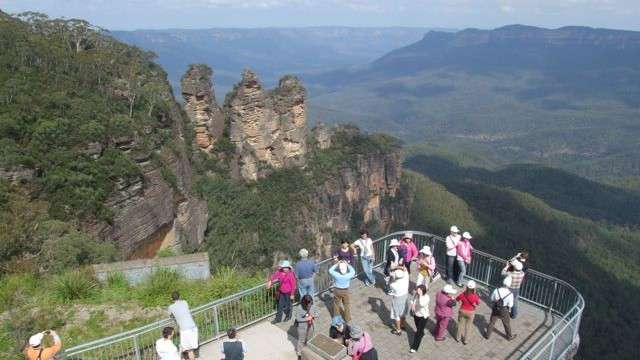
A small mountain town with the gateway to listed Blue Mountains and home to the Three Sisters rock formation, a perfect retreat for the outdoor enthusiast.

Blue Mountains
Blue Mountains

The listed and protected Blue Mountains, home to the Three Sisters, an unusual rock formation. Bush walk and hike the many trails, for the outdoor enthusiast this really is a natural wonder. Discover another world and float on air in a Skyway cable car, ride the steepest railway in the world or stroll through the Jurassic rainforest.

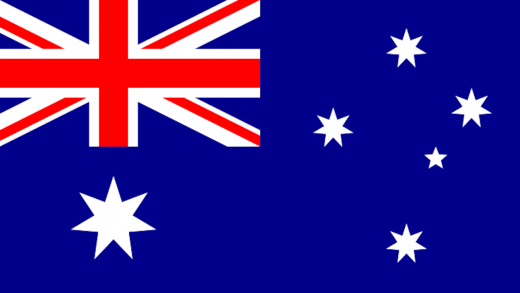
Australia Flag
Australia
Coat of Arms Australia
Capital: Canberra
Area: 2,988,902 sq mi / 7,741,220 km²
Population: 21,468,700 (2008)
Currency: Australian Dollar

View Joe Journeys in a larger map