A region named Germania, inhabited by several Germanic peoples, has been known and documented before AD 100. Beginning in the 10th century, German territories formed a central part of the Holy Roman Empire, which lasted until 1806. As a modern nation-state, the country was first unified in the Franco-Prussian War in 1871. After World War II, Germany was divided into two separate states, East Germany and West Germany, and was reunified in 1990 with the capital and largest city of Berlin. It has developed a high standard of living and established a comprehensive system of social security, recognised as a scientific and technological leader in several fields.
The German Confederation, a loose league of 39 sovereign states, was founded after the fall of Napoleon Bonaparte by the Congress of Vienna in 1814. Disagreement with restoration politics partly led to the rise of liberal movements, demanding unity and freedom. In light of a series of revolutionary movements in Europe, which successfully established a republic in France, intellectuals and commoners started the revolutions. The state known as Germany was unified as a modern nation-state in 1871, when the German Empire was forged, with the Kingdom of Prussia. After the French defeat in the Franco-Prussian War, the German Empire was proclaimed in Versailles on 18 January 1871. Germany had no national flag until 1892 and no national hymn until after WW I.
Germany's imperialism reached outside of its own country and joined many other powers in Europe in claiming their share of Africa. Germany owned several pieces of land in Africa including German East Africa, South-West Africa, Togo, and Cameroon.
The assassination of Austria's crown prince on 28 June 1914 triggered World War I. Germany, as part of the unsuccessful Central Powers, suffered defeat against the Allied Powers.The German Revolution broke out in November 1918, and Emperor William II and all German ruling princes abdicated. The treaty was observed in Germany as a humiliating continuation of the war and facilitated the later rise of Nazism in the country.
At the beginning of the German Revolution, Germany was declared a republic and the monarchy collapsed. Suffering from the Great Depression, the harsh peace conditions dictated by the Treaty of Versailles, and a long succession of more or less unstable governments, the people of Germany increasingly lacked identification with their political system and parliamentary democracy. Worsened by a widespread right-wing party, which promoted the view that Germany had lost World War I because of the efforts and influence of those who wanted to overthrow the government. The top brass of the government was accused of betraying the German Nation by signing the Versailles Treaty, while the radical left-wing communists had wanted a revolution to abolish "capitalist rule". Discontentment with the government helped fuel the growth of the German Communist Party, many conservatives were drawn towards the right, particularly the National Socialist German Workers Party, the Nazi Party. By 1932, these two parties controlled the majority of parliament, on 30 January 1933, Adolf Hitler was appointed as Chancellor of Germany.
On 27 February 1933, the Reichstag building went up in flames, and a consequent emergency decree revoked basic citizen rights, an Enabling Act passed in parliament gave Hitler unrestricted legislative power. Using his powers to crush any actual or potential resistance, Hitler established a centralised totalitarian state within months. Industry was revitalised with a focus on military rearmament. German foreign policy became more aggressive and expansionistic. In 1938 and 1939, Austria and Czechoslovakia were brought under control and the invasion of Poland on 1 September 1939 was swiftly occupied by Germany and by the Soviet Red Army. The UK and France declared war on Germany marking the beginning of World War II in Europe. As the war progressed, Germany and its allies quickly gained control of much of continental Europe.
Germany broke the Hitler-Stalin pact and invaded the Soviet Union in 1941. The same year, Japan attacked the American base at Pearl Harbor, and Germany declared war on the United States as a consequence of its alliance with Japan. The German army advanced into the Soviet Union quite rapidly, the Battle of Stalingrad marked a major turning point in the war. In September 1943, Germany's ally Italy surrendered. German armed forces surrendered after the Red Army occupied Berlin on 8 May 1945. In what became known as The Holocaust, the Third Reich regime enacted governmental policies directly crushing many dissidents and minorities. About seventeen million people were murdered during the Holocaust, including six million Jews, Gypsies, Poles and other Slavs, Soviet POWs, the mentally ill, homosexuals, and members of the political opposition. World War II and the Nazi genocide were responsible for more than 40 million dead in Europe.
After the war the western sectors, controlled by France, the United Kingdom, and the United States, were merged on 23 May 1949, to form the Federal Republic of Germany. On 7 October 1949, the Soviet Zone became the German Democratic Republic. Known as "West Germany" and "East Germany", and the two parts of Berlin as "West Berlin" and "East Berlin". East Germany selected East Berlin as its capital, while West Germany chose Bonn.
West Germany, established as a federal parliamentary republic with a "social market economy" and came to enjoy prolonged economic growth beginning in the early 1950s. East Germany was an Eastern bloc state under political and military control by the USSR. While claiming to be a democracy, political power was solely executed by leading members of the communist-controlled Socialist Unity Party of Germany. Their power was ensured by the Stasi, a secret service, controlling every aspect of society. The Berlin Wall, built in 1961 to stop East Germans from escaping to West Germany, became a symbol of the Cold War.
In the summer of 1989, Hungary decided to dismantle the Iron Curtain and open the borders, causing an exodus of thousands of East Germans going to West Germany via Hungary. The East German authorities eased the border restrictions allowing East German citizens to travel to the West, intended as a pressure valve to retain East Germany as a state. A year later on 12 September 1990, with the Two Plus Four Treaty, under which the four occupying powers renounced their rights under the Instrument of Surrender, Germany regained full sovereignty. This permitted German reunification on 3 October 1990, with the accession of the five re-established states and Berlin once again became the capital of the reunified Germany.
When one thinks about Germany, one also imagines the German efficiency, which is highly impressive. Having only visited the cities of Berlin and Frankfurt, I was highly impressed with its structure and organisation. Despite what history shows, Germans really are an impressive bunch, and certainly know how to have a good time.
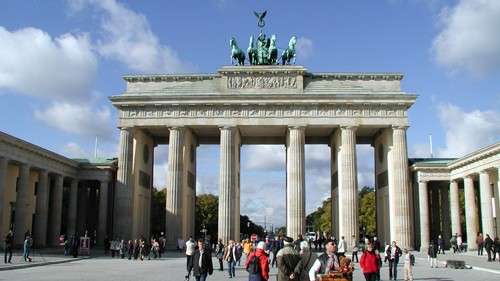
The capital city with a population of 3.4 million, the country's largest city, and the second most populous city in the European Union. Berlin has evolved into a focal point for individuals attracted by liberal lifestyle, modern zeitgeist and low cost of living, and most importantly, a good quality of life.
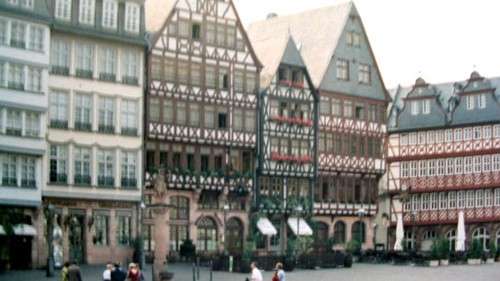
The financial and transportation center of Germany. The place of residence of the European Central Bank, the Frankfurt Stock Exchange and is one of the two largest financial centre's in continental Europe.