In Japan, all roads, rails, shipping lanes and planes lead to Tokyo, the capital of Japan, is the most populated urban area in the world, at over 12 million people in the official metropolitan area alone, a population of 35 million people if you include Greater Tokyo.
The size of Tokyo can intimidate the first-time visitor. Much of the city is a jungle of concrete and wires, with a mass of neon and blaring loudspeakers. At rush hour, crowds jostle in packed trains and masses of humanity sweep through enormous and bewilderingly complex stations. The biggest part of the Tokyo experience is just wandering around at random and absorbing the vibe, poking your head into shops selling weird and wonderful things, sampling restaurants where you can't recognize a single thing on the menu (or on your plate), and finding unexpected oases of calm in the tranquil grounds of a neighbourhood Shinto shrine. It's all perfectly safe, and the locals will go to sometimes extraordinary lengths to help you if you just ask.
Tokyo was originally known as Edo, which means "estuary". Its name was changed to Tokyo (t? (east) + ky? (capital) when it became the imperial capital in 1868. During the early Meiji period, the city was also called "T?kei".
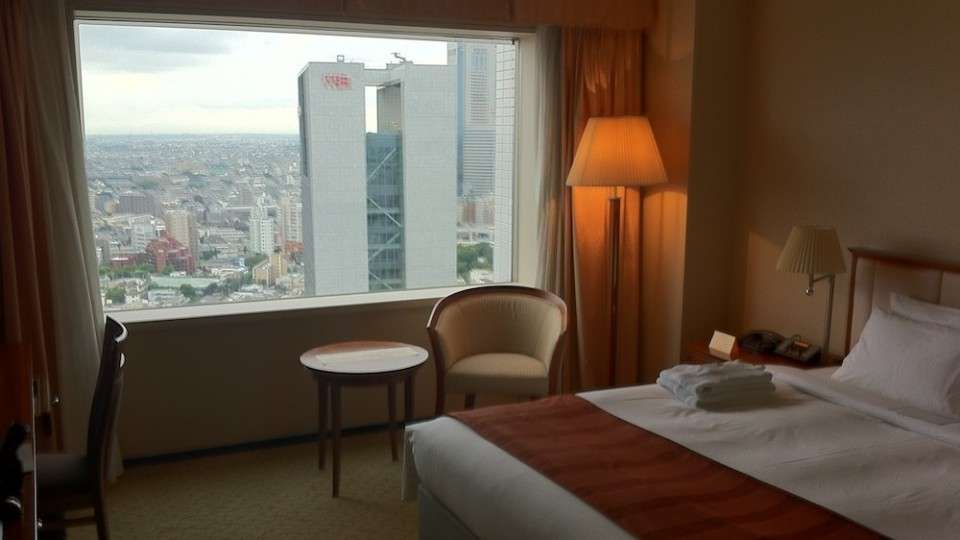
Arriving into Haneda International has been the most efficient airport I've ever gone through. Leaving the aircraft to catching my train took only 20 minutes, including passport control, baggage pick-up and customs clearance. At 5:26am I was on my way to my hotel to drop off my bag, early arrivals usually means burning some time before an afternoon check-in, so my plan was to become familiar with surrounding area and get some things sorted.
I arrived on a national holiday, Respect-for-the-Aged Day, the third Monday of September is a unique Japanese national holiday which honors and shows respect to the aged. This is also the day for the Japanese people, with the highest life-expectancy rate in the world, to think about social welfare issues that concern senior citizens.
I expected a mad rush hour hour and packed trains but was not the case. Instead I watched the rising sun from the seat of my train, and found the streets empty and clean while I wheeled my bag to the hotel. It was only 6:45am, it would be seven hours before I could check-in.
Instead of the chaos and madness I expected, found what seems to be the most ordered social culture where respect, greetings and patience seems to be the way of life, structure and order. Waiting for the train people queue in front of white painted lines on platforms where doors will open, form single lines, passengers off first then board.
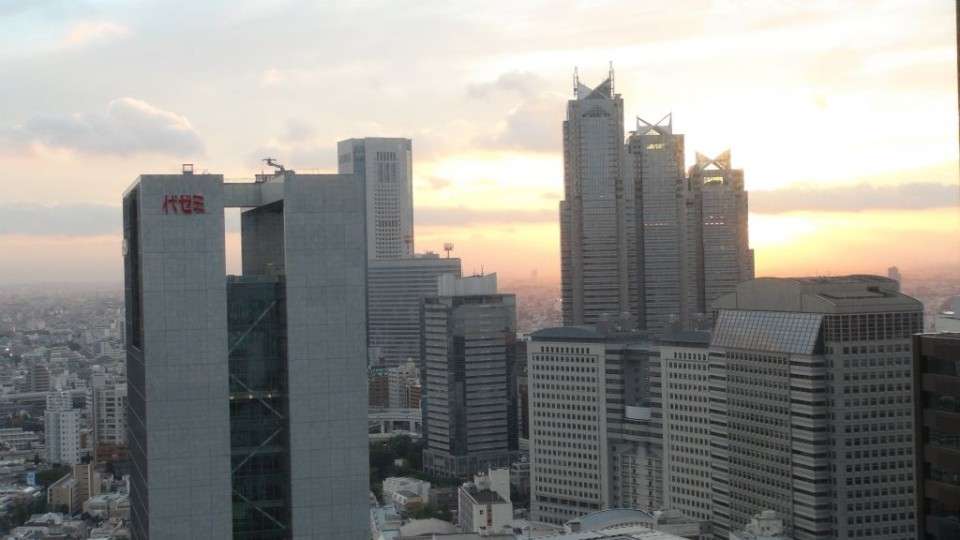
Having familiarised myself with the Shinjuku area made my way to the Metropolitan Buildings for sky high views of Tokyo, entrance is free, giving a good view of the city. The building also has a Tokyo tourist office which provides free maps and advice.
With itinerary in hand started my day from Shinjuku station, worlds busiest train station with approx 3-4 million passengers per day. Took the Chou Line from platform 8 to Tokyo Station, a red brick facade building restored to a pre-World War II appearance, a contrast between old and new Tokyo of the surrounding buildings. Proceeding down the wide street from the centre of the station and past a moat, Wadakura-bori, continuing on beyond the Wadacura Fountain Park, finally arrived at a large park and Imperial Palace, which is closed to the public, except for two days of the year (2 January and 23 December). The main park of the palace grounds, Imperial Palace East Garden, is open to the public and free to enter, but don't expect much, I was underwhelmed by it, with moat and walls around the park, few paths and not much more. My feet could have done without the extra steps visiting these gardens. Returned to Tokyo station to take Yamanote Line to Ueno, then changed to Metro Ginza Line to Asakusa where I was rewarded with a much more interesting place worth visiting, Sensoji Temple.
Tokyo city size and populated is incredibly efficient and ordered. London is one third the size of Tokyo (population) but is more chaotic to get around. Even walking down the streets of Tokyo I never feel crushed or packed in, it flows, it has a rhythm and heart, much like everywhere in Japan. London seems confused and crowded in comparison, perhaps due to a more multicultural society where each conforms to their own ways. Where in Japan there is more unity, and respect for people and others, something many countries in the west have none of. I'm not saying Japan is perfect, but it's near enough what a utopian society would be.
Video of Tokyo Japan 2012 © Joe Mendonca
Tokyo has a vast array of sights, but the first items on the agenda of most visitors are the temples of Asakusa, the gardens of the Imperial Palace (in Chiyoda) and the Meiji Shrine in Harajuku.
Sensoji Temple, Asakusa
Tokyo National Museum, Ueno
Tokyo has many commercial centres for shopping, eating and simply wandering around for experiencing the modern Japanese urban phenomenon. Each of these areas have unique characteristics, such as dazzling Shinjuku, youthful Shibuya and upmarket Ginza. These areas are bustling throughout the day, but they really come into life in the evenings.
For a viewing platform, the Tokyo Tower is the best known and offers an impressive view, even if it's rather overpriced. The highest spot in Tokyo is the Tokyo Metropolitan Government building (in effect, Tokyo's City Hall) in Shinjuku. Its twin towers have viewing platforms that are absolutely free, and offer a great view over Tokyo and beyond. However, the best option would probably be from the World Trade Center Building at JR Hamamatsucho station which, although not as high, offers stunning views of Tokyo Tower and the waterfront due to its excellent location, especially at dusk. Another good optionl, is the Rainbow Bridge at Odaiba, whose pedestrian walkways are free. The night-time view across Tokyo Bay is impressive but the walkways close at 20:00.
A visit to Tokyo must include a visit to the famous Hachi-ko Statue in Shibuya, where the the story about a dogs loyalty will just about break your heart. Read about Hatchiko here.
Over 500 years old, the city of Tokyo grew from the modest fishing village of Edo. While the emperor ruled in name from Kyoto, the true power was concentrated in the hands of the Tokugawa shogun in Edo. After the Meiji restoration in 1868, during which the Tokugawa family lost its influence, the emperor and the imperial family moved here from Kyoto, and the city was re-named to its current name, Tokyo.
Edo was first fortified by the Edo clan, in the late twelfth century. In 1457, ?ta D?kan built Edo Castle. In 1590, Tokugawa Ieyasu made Edo his base and when he became shogun in 1603, the town became the center of his nationwide military government. During the subsequent Edo period, Edo grew into one of the largest cities in the world with a population topping one million by the 18th century. Tokyo became the de facto capital of Japan even while the emperor lived in Kyoto, the imperial capital. After about 263 years, the shogunate was overthrown under the banner of restoring imperial rule. In 1869, the 17-year-old Emperor Meiji moved to Edo. Tokyo was already the nation's political and cultural center, and the emperor's residence made it the imperial capital as well, with the former Edo Castle becoming the Imperial Palace. The city of Tokyo was established, and continued to be the capital until it was abolished as a municipality in 1943 and merged with the "Metropolitan Prefecture" of Tokyo.
Central Tokyo, like Osaka, has been designed since about 1900 to be centered on major railway stations in a high-density fashion, so suburban railways were built relatively cheaply at street level and with their own right-of-way. This differs from many cities in the United States that are low-density and automobile-centric. Though expressways have been built in Tokyo, the basic design has not changed.
Tokyo went on to suffer two major catastrophes in the 20th century, but it recovered from both. One was the 1923 Great Kant? earthquake, which left 140,000 dead or missing, and the other was World War II. The Bombing of Tokyo in 1944 and 1945, with 75,000 to 200,000 killed and half of the city destroyed, was almost as devastating as the atomic bombs of Hiroshima and Nagasaki combined.
After the war, Tokyo was completely rebuilt, and was showcased to the world during the 1964 Summer Olympics. The 1970s brought new high-rise developments such as Sunshine 60, a new and controversial airport at Narita in 1978 (some distance outside city limits), and a population increase to about 11 million (in the metropolitan area).
Tokyo's subway and commuter rail network became one of the busiest in the world as more and more people moved to the area. In the 1980s, real estate prices skyrocketed during a real estate and debt bubble. The bubble burst in the early 1990s, and many companies, banks, and individuals were caught with mortgage backed debts while real estate was shrinking in value. A major recession followed, making the 1990s Japan's "Lost Decade" from which it is now slowly recovering.
The 2011 T?hoku earthquake and tsunami that devastated much of the northeastern coast of Honshu was felt in Tokyo. However, due to Tokyo's earthquake-resistant infrastructure, damage in Tokyo was very minor compared to areas directly hit by the tsunami, although activity in the city was largely halted. The subsequent nuclear crisis caused by the tsunami has also largely unaffected Tokyo, despite occasional spikes in radiation levels.