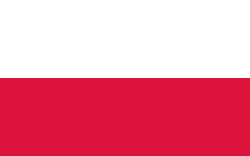
Formed more than 1,000 years ago, its golden age was near the end of the 16th century when Poland was one of the largest, wealthiest, and most powerful countries in Europe.
Thoughts of war, destruction and the atrocities at Auschwitz are the first images that come to mind about Poland but as I found there is so much more to to be discovered with legends, history, scenery, culture, entertainment, and the people. A member of the European Union since May 1st 2004, tourism has blossomed and is on a path of rebuilding and revealing its true treasures. A proud and cultured population, Poles have maintained a distinct sense of culture and community.
Nowadays, Poland is a democratic country with a stable, robust economy. Poland has also successfully joined the border-less Europe agreement, with an open frontier to Germany, Czech Republic and Slovakia. Poland's dream of returning to Europe as a respected independent nation has finally been achieved.
The Polish language, part of the West Slavic branch of the Slavic languages, functions as the official language of Poland. Polish food has both influenced and been influenced by the cuisines of surrounding countries, rich in meat, especially chicken and pork, and winter vegetables, bigos (meats and vegetables, on a base of pickled cabbage), kielbasa, barszcz, pierogi, flaczki (tripe soup), golabki (cabbage rolls), pork chops, various potato dishes, a fast food sandwich (zapiekanka) and many more. Poland is known as the birthplace of vodka, a drink enjoyed by most Poles on almost any occasion.
Poland is a part of the global tourism market with constantly increasing number of visitors, the 17th most visited country by foreign tourists (2008). The most popular cities are Warsaw, Krakow, Wrocaw, Poznan, Lublin, Torun, including the historic site of the Auschwitz concentration camp near Oswiecim. Popular destinations include northeast Poland's Mazury lake district and Bialowieza Forest.
Destroyed during the war and rebuilt with a landmark from the Russian people, a gift from Stalin, that most nationals see as an eye sore. The Historic Old Town is a reconstruction of the past and the only sign of what the capital used to look like before World War 2.
BialystokThe largest city in northeastern Poland, located near Poland's border with Belarus and is the capital of the Podlaskie region, near the Bialowieza Forest range. This immense forest is home to some remarkable animal life, including rare mammals.
Królowy MostA village within Bialystok County, close to the border with Belarus. It lies approximately 21 km (13 mi) east of the regional capital Bialystok. The village has a population of 90.
Once the capital of Poland is now the cultural heart with the largest market square in medieval Europe. Listed as a UNESCO World Cultural and National Heritage Site in 1978 has plenty to see and do with charming markets, cafe's, jazz bars and pubs, castles and legends to fill the imagination.
WieliczkaA day trip to Wieliczka Salt Mine and Museum is a must, a 13th century ancient mine takes you up to 135 metres below ground to discover underground tunnels, chambers, chapels, lakes and even a resort. Claustrophobia sets in as you descend down the long shaft into the earth but all is forgotten when you soon discover the world beneath.
GdanskOne of the old, beautiful European cities, right on the Baltic coast. Destroyed in World War II, it has been perfectly rebuilt. The city is a good departure point to the many sea resorts along the north coast.
The Polish state was establishment with the adoption of Christianity in 966. The first capital was in the city of Gniezno, but a century later the capital was moved to Krakow, where it remained for half a millennium. The Kingdom of Poland was formed in 1025, and in 1569 by signing the Union of Lublin, forming the Polish-Lithuanian Commonwealth, was the largest country in Europe, attracted significant numbers of foreign migrants, including Germans, Jews, Armenians and the Dutch, thanks to the freedom of confession guaranteed by the state and the atmosphere of religious tolerance.
The commonwealth collapsed in 1795, and Poland's territory was divided among the Kingdom of Prussia, the Russian Empire, and Austria. After a failed uprising, Poland ceased to exist as a country for 123 years. A long period of foreign domination was met with fierce resistance. During the Napoleonic Wars, a semi-autonomous Duchy of Warsaw was created, before being erased from the map again in 1813. Throughout the occupation, Poles retained their sense of national identity.
Poland regained its independence in 1918, after World War I, but was later occupied by Nazi Germany when it was invaded on 1 September 1939, followed by the Soviet Union invasion, split into two zones, one occupied by Germany while the eastern provinces fell under the control of the Soviet Union. Polish civilians opposed to either side's rule were rounded up, tortured, and executed. The Nazis established concentration and death camps on Polish soil, where many millions of Europeans were ruthlessly murdered, Auschwitz is perhaps the most famous. Nearly all major cities were destroyed and with them the history of centuries was gone. Poland lost over six million citizens in World War II, the highest percentage of its citizens of all the countries involved in the war. At the end of the war, Poland's borders were shifted and the new Poland emerged 20% smaller by 77,500 square kilometers (29,900 sq mi). Forced to become a Soviet satellite country following agreements between the Western Allies and the Soviet Union (viewed by many Poles as an act of betrayal by the Allies), emerged several years later as the People's Republic of Poland in 1952. During the Revolutions of 1989, communist rule was overthrown by the Solidarity movement, a sign of the collapse of communism across Eastern Europe.
| Capital: | Warsaw |
|---|---|
| Population: | 38,628,000 (2004) |
| Area: | 323,250 km² |
| Currency: | Zloty |