Joe Journeys
Ponta Delgada Azores
Coat of Arms, Ponta Delgada

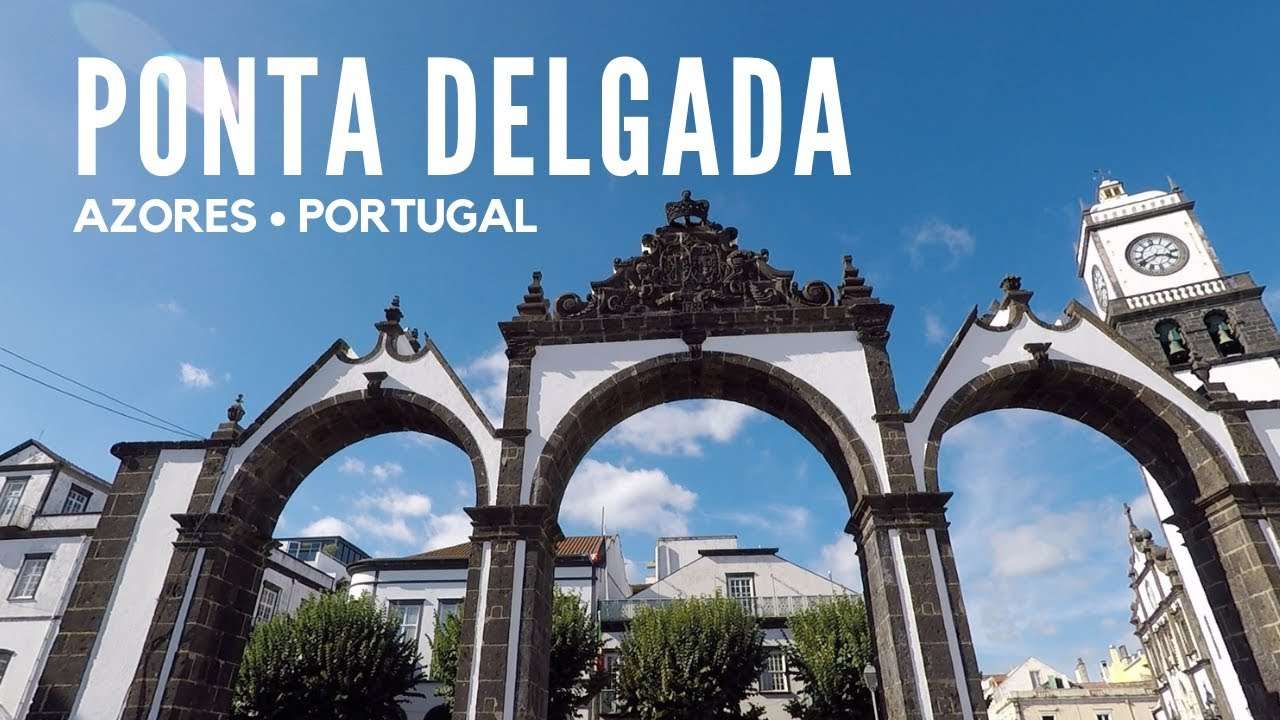
Ponta Delgada is the largest city on the island of São Miguel in the archipelago of the Azores, the autonomous region of Portugal.

Populated since 1444, the island of São Miguel was a vast territory, with small settlements scattered about, except for Vila Franca do Campo in the central-southern coast, and the community of Ponta Delgada. It was elevated to status of city, during the reign of King D. João III on 2 April 1546, after the original capital of the island, Vila Franca do Campo, was devastated by the 1522 earthquake.

The naval Battle of Ponta Delgada (also known as the Battle of São Miguel) took place on 26 July 1582, off the coast, as part of the 1580 Portuguese succession crisis. An Anglo-French corsair expedition sailed against Spain to preserve Portuguese control of the Azores, thereby preventing Spanish control.

It was during the 19th Century, that the municipality experienced its greatest boost of economic activity, with the funnelling of citrus exports to United Kingdom and the growth of foreign-owned businesses in the historic center, many of them Jewish merchants after 1818. Due to these changes, and growth of the mercantile class, Ponta Delgada became the third largest town in Portugal, in economic riches and the number of residents.

At the beginning of the 20th Century, Ponta Delgada's position was relatively high, although the changing importance of rural economies steadily chipped-away at its growth. But it remained the central place in the economy and hierarchy of the Azorean archipelago.

The climate is shaped by the Gulf Stream allowing a small variation in temperatures, with annual temperatures oscillating between 14°C and 25°C, typical to a Mediterranean or Subtropical climate. The Gulf Stream also contributes to a unstable weather that varies greatly during the Autumn and Spring, making weather forecasting on a daily basis difficult.

The municipality of Ponta Delgada presents a glimpse of the divergent economic events that exist in the Azores. With a strong concentration of service activities, the municipality is an important industrial and agricultural centre.

Cruise lines make Ponta Delgada a waypoint when journeying across the Atlantic, some spend a day at the port, as they reposition themselves between cruising Europe and the Western Hemisphere. The marina at Ponta Delgada also welcomes many yachts and private boatsman from around the world making São Miguel point of call along their trans-Atlantic travels.

Video of Ponta Delgada on São Miguel, Azores Portugal 2011 © Joe Mendonca

The Church of Sao Jose located in the center of the city is a historical landmark in Ponta Delgada. You may want to visit the Carlos Machado Museum, located in the Convento de Santo Andre, created to reflect the scientific mentality of the 19th century. Most of the information is by naturalists of the second half of the 19th century after the publication of Darwin's Theory of Evolution and the Oceanographic expeditions. The more adventurous like to go whale watching. The most popular attractions in Ponta Delgada seem to be the Town Hall, Carlos Machado Museum, Santa Catarina Palace, Fort Sao Bras and the Parish Church of Sao Sebastiao.

Organized tours can last up to 3 hours. One of the top places to sight see is Furnas, where you can find natural hot springs and also the Gorreana Tea Factory. The second most popular destination is the Lagoa do Fogo, which are beautiful volcanic landscapes and the coastline. You may also want to pay a visit to Sete Cidades, a volcanic caldera and lake-filled cones which surround the crater. The Sete Cidades Volcano at the center consists of a caldera and a volcanic field within it, that includes four lakes (two of which Lagoa Azul, the Blue Lake, and Lagoa Verde, the Green Lake, are linked).

Ponta Delgada is known for their harvesting of pineapples, so trying fresh pineapples from a local market is a must!

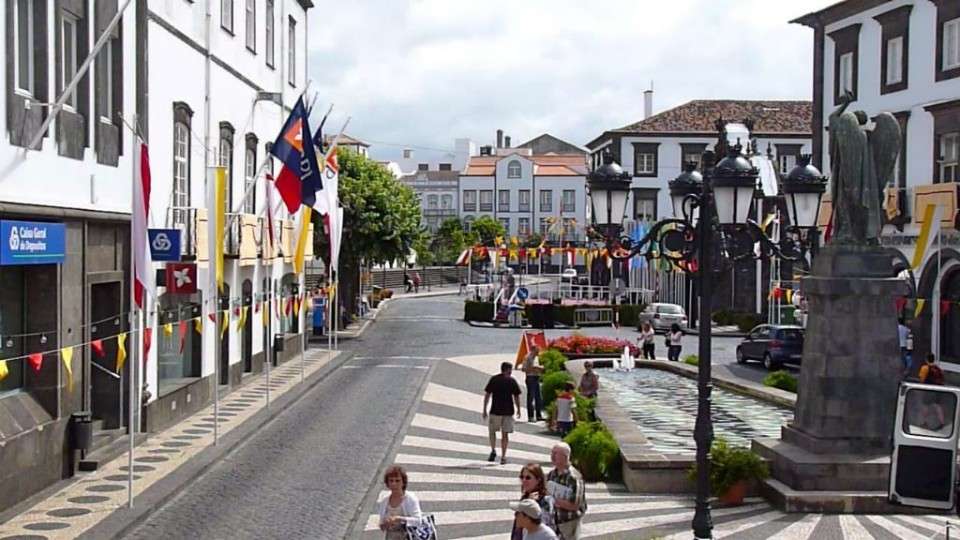
Photos of São Miguel Island, Azores Portugal 2011 © Joe Mendonca

Azores flag
Ponta Delgada
Portugal Flag
Country Portugal
Location Atlantic Ocean
Archipelago Azores
Island São Miguel Island
Area 233.47 km2 (90 sq mi) 
Population 64,516 (2001)
Currency Euro